Showing posts with label Home Security. Show all posts

Thursday, May 9, 2019

Is a Smart Phone App the same as a Detection Device?


Is a Smart Phone App the same as a Detection Device?
As the news cycle shows recent stories of spying threats in hotel rooms and rental houses many developers are touting smart phone apps as an option for scanning a space for hidden bugs or video cameras. But how effective are these apps? We took a look and discovered some key differences between common 'detection' apps and the average handheld detection device.

Magnetic Field Sensor
Most of the smart phone apps require your phone to have a magnetic field sensor or they will not work. The magnetic field sensor is similar to what is found in a stud finder or compass app and not all phones come equipped with it. Handheld detectors like a camera finder or an RF signal detector do not require any additional technology to work with the exception of batteries.

Detection from a distance
The smart phone apps did find hidden camera lens and RF signals but only when the user was really close to the hidden camera or hidden bug.  The camera lens detection option on the apps we tried caused the smart phone's light to flash slowly in order to reflect off of the hidden lens. The light from the phone managed to reflect on the lens when the distance between the hidden camera and the smart phone was closed to about 15 inches apart. Trying a basic handheld detection device like a Spy Finder or a Hidden Camera RF Detector the flashing LEDs on the detection devices picked up the hidden lens from about 15 feet away.

Sensitivity Adjustment
The smart phone apps did not offer much ability to change the sensitivity of detection. The magnetic field sensor did do a good job finding electronics but it found all of them. So a camera hidden in a picture was easy to locate. A camera hidden in a clock radio was masked by all the other electronics inside. Likewise, the apps that detected RF signals picked up signals for everything from a wireless mouse to the hidden video transmitter. Using a Wireless Camera Detector we were able to narrow the sensitivity and focus on areas that were most likely  to have a hidden camera or listening device.

Our Take Away
Smart phone apps are a viable solution for a one time scan of a very small, bare, space. But for even an average sized space, like a hotel room, it would take a fair amount of patience and time to scan the entire area. Even then a camera or hidden bug inside a clock or electronic device could be missed due to the interference from non spying electronics. For users traveling frequently or users concerned about spying outside of hidden camera or bugs such as GPS trackers, a handheld detection device could be a good investment.

Monday, November 12, 2018

Top 5 Tips for Keeping Your Home Safe During the Holidays


Top 5 tips for Keeping Your Home Safe
during the Holidays

You’re not alone if you are traveling this Holiday Season. November is upon us and like you lots of people have travel plans approaching from Thanksgiving to New Year’s. In 2017, we had record-breaking travel from November through December, the busiest months for long-distance trips every year. Increasing numbers of homes are left unattended every year during the holidays.

Enjoy a worry-free trip this holiday. Follow these few tips to keep your home secure while you’re away this season.

1. Keep Up with Home Maintenance. Don’t leave a calling card for potential intruders. Nothing tips them off more than mail, packages or newspapers piling up, overgrown landscape, or snow in the driveway. Make sure you arrange for these few things to be taken care of while you are away. Have a friend pick them up or have your mail or newspapers stopped all together. This news report of a home invasion tells how the thief knew no one was home by the newspapers in the driveway. Don’t fall victim to this simple mistake.

2. Make it look like someone is home. You may have heard this one before, but we often forget it in our time of hustle and bustle to get on the road. Simply adding a timer to your lights to turn on at a certain time can make it look like someone is home. Our outdoor version can double as outside hidden security. Having a dark home is a dead ringer you aren’t there. You don’t need to channel your inner Kevin McCallister in Home Alone, to make your space look occupied. Some other tricks are leaving a pair of shoes by the door, keeping a TV on or keeping a car in the driveway.

3. Lock Up. It’s obvious, but sometimes we forget. A large number of home invasions happen through unlocked entry. Take an extra walk through your home to make sure all the windows and doors are locked while you are away. Lock up or move any valuables out of sight. Also make sure you don’t have any spare keys hidden in obvious places outside your home.

4. Home Security. Whether it’s a dog, alarm system or video surveillance, you will know when someone has entered your home. Our covert video surveillance is disguised in your everyday objects that get overlooked in most circumstances. You can arm yourself with a standalone DVR, WiFi or cloud storage camera. WiFi and Cloud cameras have the ability of notifying you when they detect movement in the area of view. With FREE apps, you can check-in with live streaming, recording and play back options at anytime from anywhere you get a signal. And if your home is broken into while you’re away, you can notify the authorities and have clear evidence of the perpetrator to take to law enforcement.

5. Keep your plans off Social Media. In a high technological society, we tend to overshare. We check-in and post from everywhere. Don’t put your holiday travel schedule in print for everyone to see because that information is widely accessed. Keep a close friend or neighbor in the loop, they can check on your place while you are gone. You don’t need to share right away, if you take any pictures or have any fun experience, post them when you return.


Tuesday, June 24, 2014

Spying on Seniors: How Granny Cams allow relatives to see the bigger picture

In 2012, Doris Racher noticed that items had begun disappearing from the room of her 96-year old mother, Eryetha Mayberry, a dementia patient in Oklahoma City. After deciding to put a video surveillance camera resembling an alarm clock in her mother’s room, Racher was horrified to find much more than petty theft occurring – the staff members were emotionally and physically abusive.

A more recent incident occurred in Andover, Kansas when Donna Colcher, a stroke victim and dementia patient at a local nursing home was mistreated by an RN and two nurses aides. Her husband installed a hidden camera to confirm his suspicions and within 12 hours the video revealed horrific treatment.

Unfortunately, these instances of elder abuse are becoming increasingly common. Shocking stories of stroke patients being taunted and left without food, Alzheimer’s patients being physically abused, and myriad cases of verbal abuse are being exposed due to relatives turning towards the one technology that shows them what’s really happening behind the scenes – surveillance cameras.

One in 20 are mistreatedAccording to an AlertBulletin published by CNA Financial, one in 20 elderly residents of nursing homes are mistreated, and for each documented case of abuse or neglect, at least five go unreported. Cleverly called “granny cams,” these surveillance devices are designed to protect residents who may not be able to speak up on instances of abuse by employees, or even resident-on-resident violence.

Georgia Anetzberger is the president of the Washington-based National Committee for the Prevention of Elder Abuse, and she expects an increased number of states to accept surveillance camera usage, as the technology is not so taboo as in past years. “There’s a comfort level with cameras that can catch actions that are disturbing and unlawful,” Anetzberger said. “Without these cameras, it probably wouldn’t be possible to get these kinds of outcomes.”

States are taking actionCurrently, there are no states that expressly prohibit granny cams.
  • In South Carolina, current legislation allows for video footage to be used in both civil and criminal courts. 
  • Oklahoma has a law explicitly permitting the use of cameras in long-term care facilities. This law, as well as in South Carolina, Texas, Maryland and New Mexico, penalizes anyone who tampers with the video surveillance technology. 
  • In both New York and Ohio, state attorney generals have used camera footage in lawsuits against nursing homes. 
  • Maryland and New Mexico have both adopted laws expressly for video surveillance in regard to nursing homes and long-term care facilities. In New Mexico, residents must be informed of their right to video surveillance when entering a long-term care facility. 
  • Following Donna Colcher's abuse at a federally rated 5-star nursing home in Kansas, state representatives have begun drafting legislation. 
  • Minnesota passed legislation in 2009 giving adult foster-care facilities the right to video surveillance in order to cut down on staff costs; however, this legislation does not specifically address other care facilities. 
  • Tennessee is currently ranked 38th in the country for nursing home care, with responses in a national nursing home study showing poor staffing, a lack of professional care, over medication of residents, and less than three hours per day of direct resident care. 
  • The Florida Senate Judiciary Committee recently approved legislation that will make it more difficult for plaintiffs to seek punitive damages in court against care facilities. 

Texas leads the nation in resident-initiated monitoringMore than 12 years ago, Texas was the first state to enact legislation on resident-initiated monitoring, and is still the current comparison for other states drafting their own laws. Texas law provides five conditions for resident-initiated monitoring:

  • Permission must be obtained from the roommates of the resident, and these roommates may include conditions to the agreement (such as the camera never being pointed directly towards them). 
  • Notices must be posted throughout the nursing home or care facility to notify residents, visitors and staff of the cameras. 
  • The resident themselves must provide consent for monitoring unless deemed incapable, in which case a family member or relative may make the decision on the resident’s behalf. 
  • Only unedited, un-enhanced recordings or videotapes may be used as evidence in court, and must be time and date-stamped. 
  • If covert monitoring is discovered, it cannot be considered grounds for discharge but must be brought to video surveillance standards. 

As more and more families are turning towards cameras as a way to protect their loved ones, small businesses must be aware of the legislation in their state. Those in favor of video surveillance monitoring believe the cameras would improve the resident’s overall quality of life and their safety, while also lowering theft rates and increasing employee productivity. Those opposing granny cams are afraid the technology will eventually replace human contact, reduce staff interaction with residents, or even be used to bully residents.

Is the technology of the granny cam an invasion of privacy, or a helpful tool in protecting loved ones unable to protect themselves? What would you do if you suspected a loved one was being mistreated in a nursing home? We encourage you to educate your customers on the available options for protecting what matters.

Resources:

http://well.blogs.nytimes.com/2013/11/18/watchful-eye-in-nursing-homes/?_php=true&_type=blogs&_r=0

http://www.abajournal.com/news/article/granny_cam_law_aimed_at_curbing_nursing-home_abuse_takes_effect_in_oklahoma

http://www.marylandnursinghomelawyerblog.com/nursing_home_legislation/

http://texastitle19.com/2011/03/09/texas-nursing-home-cam/

http://www.startribune.com/local/130091608.html

http://www.postandcourier.com/article/20130505/PC16/130509618

http://www.tennesseelawblog.com/nursing_home_neglect/

http://www.kake.com/home/headlines/I-Team-Investigation-Nursing-Home-Nightmare-Part-2-260052631.html?ref=631

Tuesday, February 18, 2014

Connect Neighborhood Surveillance With This New Portal

A segment on ABC’s 20/20 spotlighted Nextdoor as a way to get neighbors to kiss and make-up in event of neighborly discourse. But Nextdoor is so much more, and you need to get involved ASAP. Their mission statement is music to our ears as citizens and as a business owner in the surveillance industry. Nextdoor’s mission is to "use the power of technology to build stronger and safer neighborhoods."

Your customers may live in one of 28,000 neighborhoods in the US participating in Nextdoor That’s 1 in 6 neighborhoods across the country. Combine town hall meetings, homeowner associations, neighborhood watchdogs, and social butterflies and you'll get the picture. It's an online community for neighbors to connect and problem-solve..And it's free. Sure, you could compare it to Facebook, but it's much less fluff, no "likes" required, no advertising (not yet anyway), and truly targeted to residents in or around your immediate area.

According to their website, people are using Nextdoor to:

• Quickly get the word out about a break-in
• Organize a Neighborhood Watch Group
• Track down a trustworthy babysitter
• Find out who does the best paint job in town
• Ask for help keeping an eye out for a lost dog
• Find a new home for an outgrown bike
• Finally call that nice man down the street by his first name

The video below is worth watching. Imagine what that homeowner would have captured if his camera had been hidden! We couldn't wait to share this fast growing tech resource that can help you connect to your neighbors and customers. If neighbor Susie and neighbor Bob can't figure out who is stealing their deliveries, breaking into their cars or worse, entering their homes...you can be part of that dialogue and problem solving. A hidden camera in Susie's home may make her feel better about referring her neighbors to the housekeeper who never violated her trust.

At the very least, joining Nextdoor will  you get on the invite list for the neighborhood block party.

 
ABC Entertainment News|ABC Business News


Tuesday, September 10, 2013

The Honest Reviews calls the Zone Shield Night Vision Clock Radio DVR “a great product”

Tech expert Tony Tran with The Honest Reviews recently reviewed our new Zone Shield Night Vision Clock Radio DVR and we’re pleased that he rated the camera four out of five stars – and even higher on the design and ease of use. We’ve pulled out a few excerpts from the review below.

Here’s what Tony had to say about the design:
“The clock radio is light and the design is very stylish which makes it great to look at. It feels and weight similar to my real alarm clock, so there is no way to tell that it’s a hidden camera unless you open it up and look inside.”

And the video quality:
“I was pleasantly surprised by the quality of the video in complete darkness. You can even read some of the text on the box shown in the image” 

Screen capture from video in a well lit room.
Screen capture from video with Night Vision working in total darkness.

Tony’s final thoughts:
“Overall, the Zone Shield Night Vision Clock Radio DVR is a great product as it was easy to setup, easy to use, very stylish design, and comes with a lot of features. If you are shopping for a nanny camera or hidden camera that is built into a working household appliances, then the Zone Shield Night Vision Clock Radio DVR SC8000 is definitely recommended. This device was assembled in America using high quality video surveillance components which makes it even more reliable as a hidden camera.”

Visit The Honest Review and read the full review as well as see pictures from the review process and enter for a chance to win a Clock Radio DVR!

Wednesday, August 28, 2013

Redesigned for Good: The Evolution of the Zone Shield® Night Vision Clock Radio DVR

The Zone Shield Clock Radio sports branded packaging.
There is history behind every redesigned product. 

 KJB’s newly designed Zone Shield® Night Vision Clock Radio DVR was the result of repeated attempts to provide a reliable clock radio DVR that would not have to be tweaked, fitted, or modified. Years in the making, working with products off the shelf of Walmart, and several visits to China still had not resulted in what KJB considers to be an acceptable surveillance device. We finally determined that a retrofitted product would just never be good enough.

Working with our partner in Taiwan, we designed the new clock radio specifically to fit a hidden camera and DVR or wireless transmitter. No more futzing with the inner wires or power supply, no more glue joints. Nothing to give away that the clock had been modified. 

A wireless QUAD and QUAD LCD version
available in September, 2013
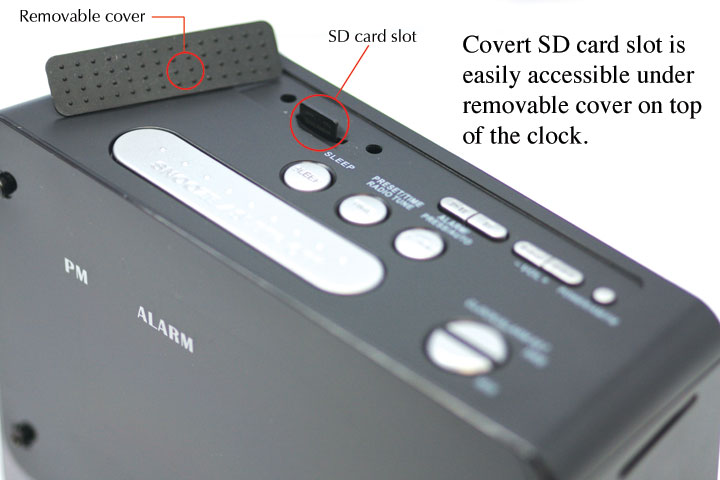
In this new design, the IRs are invisible, completely undetectable from the face of the clock and can capture action up to 20 feet away in almost total darkness. The SD card slot is completely hidden under something that looks like a normal part of a clock and is much easier to access. It’s hard to tell if we’ve designed a hidden camera to operate as a clock or a clock designed to operate as a hidden camera.


Clock radio DVRs are a dime a dozen. But the Zone Shield® Night Vision Clock Radio DVR is in a class by itself.

Wednesday, August 7, 2013

To catch a thief: the increasing role of private surveillance cameras in aiding law enforcement

Last week’s $136 million jewelry heist at the Carlton Hotel in Cannes, France played out as life imitating art as the very same hotel was featured in Alfred Hitchcock’s 1955 romantic thriller, “To Catch A Thief,” starring Cary Grant and Grace Kelly.

And while investigators are reviewing surveillance video footage from the “Heist of the Century” as some in the French media are dubbing it, last week’s news cycle here in the U.S. continues coverage on the debate over privacy vs. security in the wake of the NSA leaks scandal.

These stories are certainly worthy of the attention they are receiving, though what I’m thinking about are events over the past several months that affect real people and their sense of security and safety – oftentimes in their very own homes.

I’m thinking about the June beating of a Millburn, New Jersey woman in her home as her three-year-old daughter watched, the July hit-and-run involving a mother watching helplessly as her 18-month-old was dragged in his stroller, and most recently the Washington couple that watched live on their iPhone as their home was being robbed.

I’m reflecting on these cases and others that I hear every day working in the personal security industry and I’m even more convinced of the growing need for families to protect themselves and their property in a matter that does not put them in harm’s way.

The use of surveillance cameras in the each of these cases has played a crucial role in aiding law enforcement. In the case of the New Jersey woman, the suspect has been arrested. A warrant has been issued in the hit-and-run incident and the quick action of the Washington homeowners led police to the home where the thief dropped stolen items as he ran off.

While the use of home security cameras is not a new phenomenon, the quality of the devices, including hidden camera forms, infrared capabilities, wireless, and motion activated options, and the use of real-time technologies and ability of footage to go viral instantly, have changed the way law enforcement catch the bad guys. I predict that this will only increase as individuals become more aware of the many cost-effective and easy-to-use monitoring systems available to them. And don’t we all feel more secure when we’re proactively taking steps to protect our loved ones and home?

This post also appeared in Security Products Reaction Blog. Jill Johnston is president of KJB Security Products, a Nashville, Tenn.-based wholesale manufacturer and distributor of security and surveillance products.